

The safest way to buy cheap game keys in 2026 is to start with authorized digital retailers, then—only if you accept slightly higher risk—use established gray-market marketplaces with buyer protection, verified sellers, and clear region labels. Never buy from unknown sites advertising impossible discounts on day-one releases. Before checkout, confirm the key works in your region, compare the price to Steam or the publisher store, pay with a method that supports refunds, and keep your order confirmation until activation succeeds.
"A cheap key you cannot activate is not a deal. It is a donation to a stranger."
PC game prices swing wildly. A title that launched at $69.99 can sit at $14.99 six months later—or show up on a reseller for $9.99 tomorrow. That spread is why cheap game keys is one of the most searched phrases in PC gaming, and also why scam sites thrive.
This guide is a buyer's safety framework: where keys come from, what can go wrong, and how to decide whether external resellers—or spending earned balance in-platform—makes sense for you.
What counts as a "cheap" game key in 2026?
A cheap game key is any digital license sold below the first-party store price on Steam, Epic, GOG, PlayStation, or Xbox. Discounts of 20–40% on recent releases from legitimate sellers are normal during sales. Discounts of 60–80% on older catalog titles are common. Discounts above 80% on a game that released this month are statistically unusual—and often signal stolen inventory or region arbitrage that violates publisher terms.
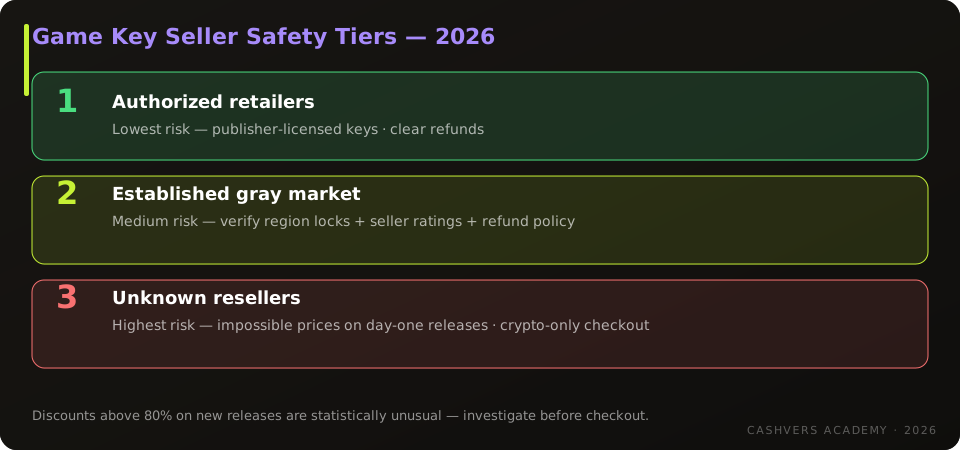
Three supply chains dominate the market:
- Authorized retailers — Direct or licensed publisher relationships.
- Gray-market resellers — Keys from regional pricing differences, bundle splits, or wholesale distributors.
- High-risk unknowns — No company identity, crypto-only checkout, impossible prices.
CashVers Store
Fund your next game with earned balance
Skip sketchy key sites — browse authorized PC titles in the CashVers Product Keys store and pay with verified earnings.
Authorized vs. gray market: how do they compare?
Authorized sellers minimize revocation risk; gray-market sites maximize discount depth at the cost of refund clarity and seller transparency. Use this table before you commit.
| Factor | Authorized retailers | Established gray market | Unknown resellers |
|---|---|---|---|
| Revocation risk | Very low | Low–medium | High |
| Refund policy | Clear, often 14–30 days | Varies; check first | Usually none |
| Typical discount | 20–50% on sale | 40–70% off catalog | 80%+ "too good" |
| Region clarity | Matched at checkout | Read listing tags | Often hidden |
| Best for | New releases | Older AAA backlog | Avoid |
What is the 7-step safety checklist?
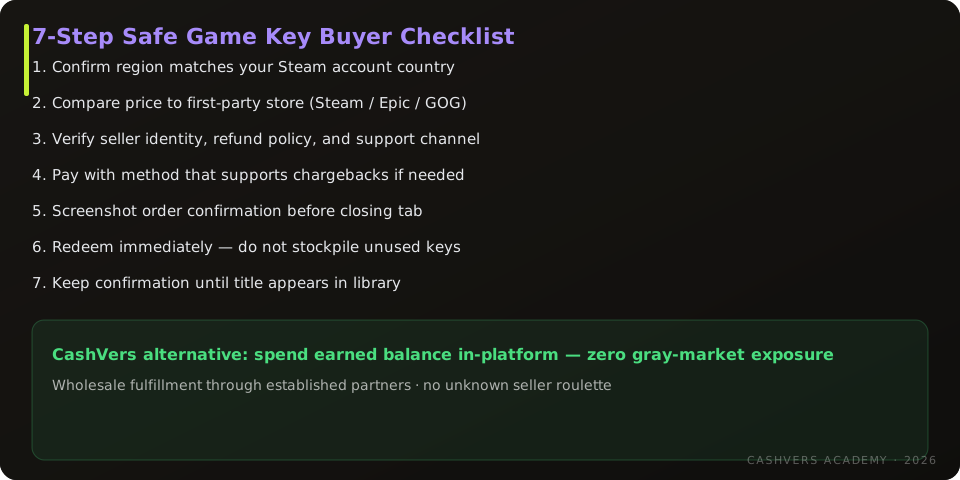
Run these seven steps on every purchase from a seller you have not used before. Skipping any one of them is how most bad purchases happen.
1. Compare against the official store first
Open Steam or the publisher page and note the current price. Tools like IsThereAnyDeal and GG.deals aggregate listings. If the gray-market price is only a few dollars below authorized, the extra risk rarely pays off.
2. Read the region tag out loud
Look for Global, ROW, EU, or US-only on the product page. Region mismatch is the most common activation failure.
3. Check seller ratings from the last 90 days
Trustpilot and community threads help, but filter for recent posts. On marketplace models, evaluate the individual seller—not just the homepage brand.
4. Pay with reversible methods when testing
PayPal and major credit cards preserve chargeback options if a key is dead on arrival. Avoid crypto until you have a successful redemption from that seller.
5. Start with a $3–5 test purchase
Never make a new reseller your first stop for a $70 preorder. Buy a cheap title, redeem immediately, and confirm support responds if something fails.
6. Save proof until activation succeeds
Screenshot the order page and keep the email until Steam, Epic, or GOG confirms the game is in your library.
7. Know what "refund" actually means
Many gray-market stores refuse refunds after a key is revealed. Read the policy before you pay—not after a failed redeem.
Which red flags should stop you immediately?
Walk away if a brand-new AAA game is 80–90% off on a site you have never heard of, checkout is crypto-only, or the listing requires a VPN without explaining region. Also avoid stores with no support channel, no company identity, or all-generic 5-star reviews.
What about region locks, DLC, and bundles?
Region locks block activation when the key territory does not match your account; DLC keys may require owning the base game; bundle splits can draw publisher audits. Verify platform, region, and edition (Standard vs. Deluxe) on every listing.
When does spending earned balance beat external key sites?
If you earn on a GPT platform, compare in-platform store pricing before cashing out to buy keys elsewhere. On CashVers, completed offers fund game-key purchases fulfilled through wholesale partners—no random third-party seller exposure, no card re-entry on unknown sites, and no crypto network fees on small cashouts.
External gray-market sites can still win on catalog depth or flash deals. Read our guide Spending balance vs. cashing out for the math. New earners should start with the first-payout playbook.
What is a practical buying workflow for 2026?
- Add the game to IsThereAnyDeal or GG.deals and set a price alert.
- If gray-market gap exceeds ~35% and the title is 6+ months old, shortlist established sellers.
- Verify region and edition on the listing page.
- Pay with protection; redeem within minutes.
- If you earn on CashVers, check the in-platform store the same day—sales do not always align.
Where does CashVers fit?
CashVers is an earn-and-spend platform—not a gray-market marketplace with thousands of user sellers. We publish Academy guides, run live support, and recommend external sellers only with the checklist above. Browse the store after you have balance, or read how to compare GPT sites in 2026 if you are choosing where to earn.
Publisher sales vs. reseller discounts: timing your purchase
The deepest legitimate discounts usually come from first-party Steam, Epic, or publisher storefronts during seasonal events — not from random resellers on launch day. Steam Summer Sale 2026 ran June 25–July 9; Winter Sale typically lands in December. Gray-market sites shine for catalog titles 6–18 months post-launch when wholesale surplus creates 50–70% gaps versus first-party list price.
Buying Elden Ring Nightreign or Clair Obscur: Expedition 33 during an authorized Steam event at 20–25% off often beats reseller hunting once you factor in support and refund rights. Buying a 2023 AAA title that never goes on first-party sale? Gray-market with the checklist below can save real money.
Protecting your Steam account while buying cheap keys
Never share your Steam password, disable Steam Guard, or buy "account sharing" access — those are account theft vectors, not deals. Legitimate key purchases only require redeeming a code on your existing account. If a site asks you to log into Steam through their iframe, leave immediately.
After redeeming any external key, confirm the game appears in your library and check that no unauthorized email changes occurred on your account. Steam's own refund policy (typically 14 days / under 2 hours playtime for direct Steam purchases) does not apply to third-party keys — another reason to test resellers with cheap titles first.
Price tracking tools worth using in 2026
IsThereAnyDeal, GG.deals, and SteamDB price history charts prevent impulse buys at fake "80% off" reseller listings. Set alerts at your target price and wait. A game at $59.99 dropping to $17.99 on a reputable gray-market site during a publisher sale week is normal. The same game at $9.99 while Steam still shows $59.99 on a site with no reviews is not normal — it is a red flag.
If you earn on CashVers, add a fourth column to your tracker: in-platform store price the day your balance clears. Sometimes the fastest safe purchase is spending earned balance instead of chasing external listings.
Chargebacks, disputes, and why they backfire on GPT earners
Chargebacking a dead key can get your payment method flagged across multiple sellers — and if you earned the purchase money on GPT platforms, chargebacks can freeze your earn account too. Open support tickets with order proof first. Reputable gray-market sellers replace dead keys or refund to store credit. Irreputable sellers ignore you — which is why the $5 test purchase matters before you commit $70.
Marketplace vs. fixed-price resellers: different risk profiles
Fixed-price stores (authorized or long-running gray-market retailers) sell keys at listed prices with store-level buyer protection. Marketplace models let individual sellers compete — higher discount potential, higher seller-quality variance. On marketplaces, filter for sellers with thousands of recent sales and 98%+ ratings. A $3 cheaper key from a zero-history seller is not a bargain — it is an experiment you might lose.
CashVers Product Keys uses wholesale fulfillment, not user-to-user listings — closer to fixed-price authorized flow than marketplace roulette. Compare when external marketplace deals exceed in-platform pricing by a margin worth the research time.
CashVers Store
Ready to buy? Start in the store
Compare prices, check regions, and checkout with balance once your offers clear.
Frequently asked questions
Are cheap game keys legal?
Buying and activating a legitimately sourced key is legal in most regions. Problems arise when keys come from stolen payment instruments or violate regional pricing agreements. Established sellers with buyer protection keep ordinary buyers far from that edge.
Can Steam ban you for gray-market keys?
Account bans for buyers are uncommon; key revocation is the realistic risk. Publishers audit fraudulent batches and disable keys that should never have entered circulation.
What is the safest site to buy cheap game keys?
Authorized partners and first-party stores are safest. Among discount specialists, long-running retailers with transparent support outperform anonymous marketplaces. Safe buying is a process—not a one-time site pick.
Do I need a VPN to activate a cheap key?
Usually no. If you do, the listing may not match your account region. Prefer listings marked Global or compatible with your country.
Are bundle keys from gray-market sites safe?
Often yes for older titles from reputable sellers, but verify edition and platform. Authorized bundle sellers remain the lowest-stress option.
Is buying keys with earned CashVers balance safe?
Spending verified earnings inside CashVers avoids third-party seller roulette. Fulfillment runs through vetted wholesale channels—not random user listings. Compare external prices during major sales before you spend.
Should I preorder keys from gray-market sites?
Generally no. Preorders on unknown resellers carry the highest fraud rate. Wait for launch, compare authorized prices, and use established sellers with buyer protection if you buy externally.
Can I share a cheap key with family Steam accounts?
Steam Family Sharing shares library access — not separate owned copies. Each household member who needs permanent ownership needs their own key or direct purchase.
Reviewed by the CashVers storefront team. Last updated: July 2026.
Stop reading. Start earning.
This guide is only useful if you actually open the dashboard.


 Google
 Discord
 Steam
Steam